
How to Travel When Your Dog Gets Anxious in Cars
It should feel like an adventure when travelling with your dog, or at least a calm and neutral experience. But for some pets, car journeys can trigger discomfort and anxiety. Whether it’s restlessness, whining, or reluctance to even get in the car, these behaviours can make trips difficult for both of you.
The good news is that with the right training and a few smart accessories, you can turn car journeys into a calmer, more positive experience. From creating a secure, familiar space with comfortable dog mats to protecting your vehicle with practical boot liners, small changes can make a big difference in helping your dog feel safe, settled, and ready for the road ahead.
Why Does My Dog Get Anxious in the Car?
Dog car anxiety can stem from many causes. Some dogs develop a fear of car travel due to past negative experiences like vet visits or accidents. Others may suffer from motion sickness, making the car ride physically unpleasant.
Sometimes, a lack of positive early exposure to car travel means the dog hasn’t learned to feel safe in a vehicle. The unfamiliar noises, movement, and confinement inside a car space can overwhelm some dogs, adding to their stress.
How Can I Tell If My Dog’s Car Anxiety Is Motion Sickness or Fear?
It can be tricky to differentiate between motion sickness and anxiety since symptoms like panting, drooling, whining, or vomiting often overlap.
If your dog drools excessively or vomits soon after the car starts moving, motion sickness may be the cause.
Anxiety-driven behaviour may include pacing, trembling, whining before the car is even in motion, or refusal to enter the vehicle. Talking to your vet can help confirm if motion sickness medications are needed alongside anxiety management.
How to Calm Your Dog in the Car
Creating a calm car environment can greatly ease your dog’s anxiety. You might find that cracking a window slightly for fresh air helps, as does keeping the temperature comfortable.
Bringing familiar items such as your dog’s favourite blanket or toys can provide reassurance. Playing soothing music or using a pheromone spray designed to reduce stress may also help.
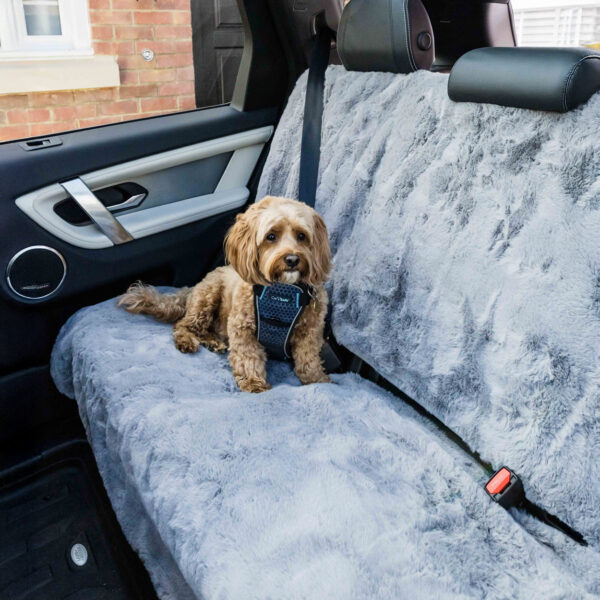
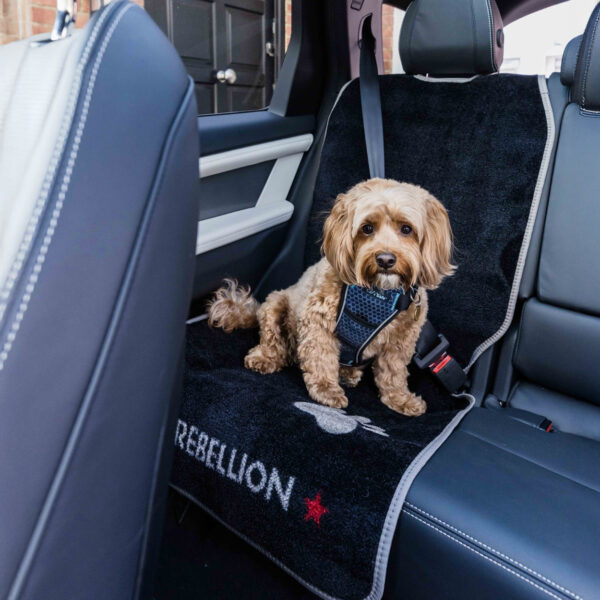
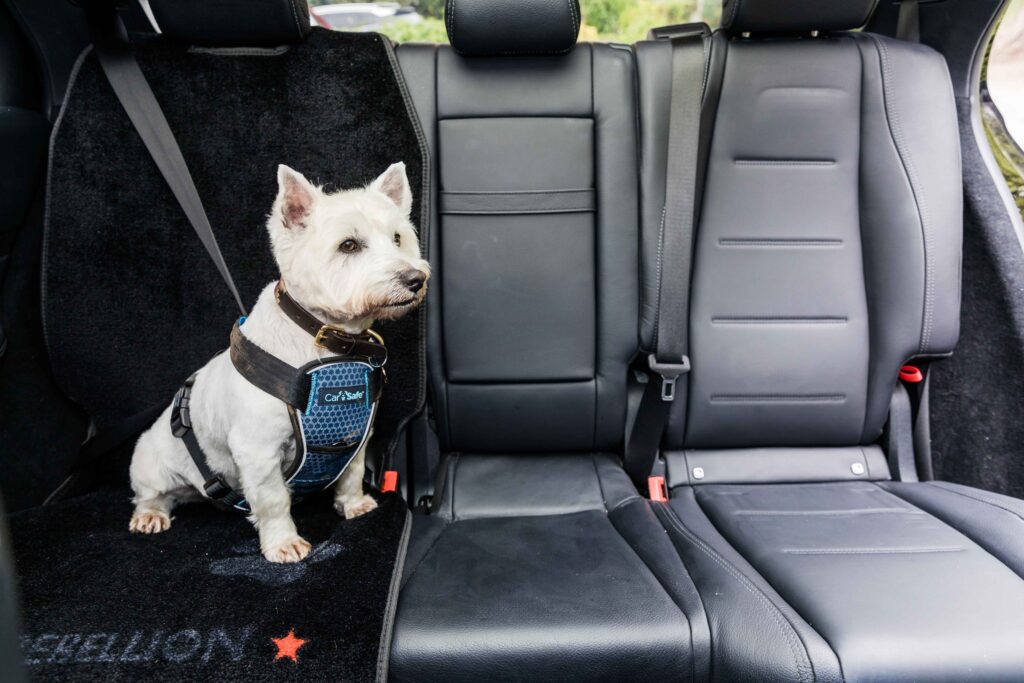
Dogs often feel safer when properly restrained, so consider using a dog seat belt harness or travel crate to keep them steady during the journey. You may also want to try a dog back seat cover or dog mat for your car boot to keep the car clean and comfortable for your pet while travelling.
How Can I Train My Dog to Travel in the Car?
If your dog does not suffer from motion sickness and is just anxious about car travel, then you can likely make good progress to overcome this over time with positive gradual desensitisation and training.
As with all forms of effective dog training, you need some form of positive reinforcement to help them overcome any car anxiety they may have. This can start from something as minor as making positive associations when your dog is near a parked car by rewarding them with treats or play.
Progress to allowing them to enter the car willingly, continuing to reward calm behaviour. Next, introduce short trips to pleasant destinations, gradually increasing drive time as your dog becomes more relaxed. Patience is essential, and you should never rush steps if your dog shows signs of stress.
This gradual desensitisation when paired with positive reinforcement is the key to training your dog to enjoy or at least tolerate car rides.
Products to Help with Dog Car Anxiety
There are many calming aids that can support your dog during travel if training has proven ineffective. These include pressure wraps like ThunderShirts, calming pheromone collars or sprays such as Adaptil, and specially designed toys to distract and comfort your dog.
For dogs with severe anxiety, talk to your vet about safe over-the-counter or prescription medications, which can be essential during the initial stages of behaviour modification or for longer journeys.
When to See a Vet About Dog Car Anxiety
If your dog continues to experience distress despite your best efforts with training and environmental adjustments, then it’s best that you consult your vet. They can rule out underlying medical issues and may prescribe medication to help manage anxiety or motion sickness.
Early veterinary advice can make the difference for dogs with severe travel anxiety, ensuring both your safety and your dog’s wellbeing while on the road.
Make Future Car Rides More Positive for Your Dog
It’s crucial that you try your best to make every interaction with the car a positive one, especially early on. Then, by offering treats, praise, or playtime after a successful car trip you can reinforce these good experiences.
Try to mix up destinations to include fun places like parks or playdates, not just stressful visits to the vet or groomer if these make your dog uncomfortable. Regular, short trips can help your dog build confidence and reduce their anxiety. Remember, consistency and patience will gradually transform the car from a source of fear to a place of comfort.
By combining behaviour training, calming techniques, and safe travel practices, you can create a peaceful experience for both you and your furry companion.
-

Back Seat Comfy Car Seat Cover
Out of Stock£44.99 -
Car Seat Carpet – Adjustable Headrest
£36.99 -
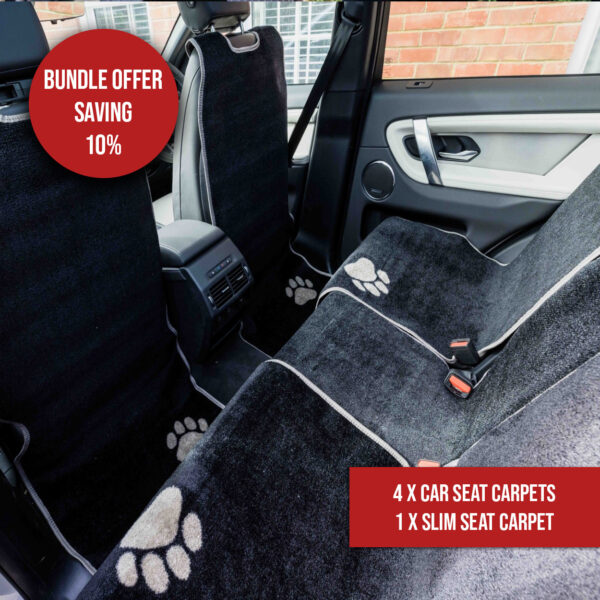
Complete Car Seat Carpet Set
Original price was: £165.95.£149.35Current price is: £149.35. -
Pet Travel Bag / Backpack Set- Black
Original price was: £39.99.£19.99Current price is: £19.99. -
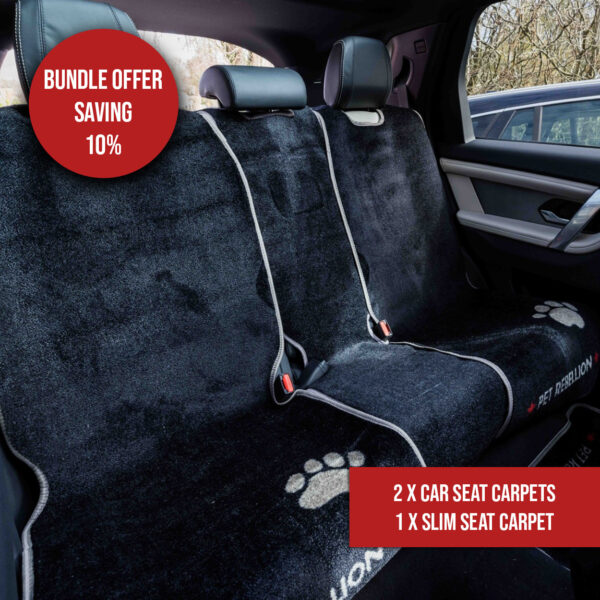
Slim Seat Carpet Set
Original price was: £91.97.£82.77Current price is: £82.77.